Showing posts with label likőr. Show all posts

February 19, 2019

fehércsoki likőr // white chocolate liqueur

Az alattam lakó néni haldokló fikuszát tartó állvány alatt, a lépcsőház sarkában lakik egy kobold, aki a Bigli névre hallgat. Ma hazafelé jövet hallom ám, hogy nagyban cuppog, és hozzá még dúdol is, csak akkor hallgatott el, amikor már egészen közel értem hozzá. - Hát te meg mit művelsz itt? - kérdeztem. - Semmit, semmit - felelte, mert már hozzászokott, hogy ha rosszaságot művel, olyankor fenékbe billentem. Ebből persze tudtam, hogy megint rosszaságot művelt, amit csak tetézett, hogy elő se merte dugni a képét. - Már megint loptál valamit, mi? - kérdeztem, jól ismervén a szokásait. - Á, dehogy! - hazudta, továbbra is a sarok biztonságából. - Na állj csak elő a farbával, gyerünk, különben többé nem kapsz kenyeret tőlem! - (a házi koboldok többsége kenyéráldozatból tartja fenn magát).
Na erre már előmászott, kezében az üveggel. - Hát az meg mi? - böktem rá. - A tündérkirálynő itala - motyogta Bigli bűntudatosan. - Miért kell neked mindent ellopnod?! Most visszaviszed a kertbe, és visszaadod a tulajdonosának - Na erre már a zubbonya alá dugta az üveget, és felhúzta az orrát. - Ki van csukva! Inkább neked adnám, mint vissza a királynőnek! - Mérgemben toppantottam. - Akkor add nekem! De rögvest, különben nincs több kenyér, se só! - (a házi koboldok kiváltképp szeretik a sót, főleg, ha a küszöbre helyezett kis tálkában kapják). Bigli kényszeredetten nyújtotta felém az üveget. Kikaptam a kezéből, és büntetésből farba billentettem. 
Persze mielőtt visszaadtam a tündérkirálynőnek az üveget erősen megfogyatkozott tartalmával együtt, én is megvámoltam egy icipicit - elvégre nem minden nap iszik az ember a tündérek italából.


Miután megkapta szeretett likőrjét, a tündérkirálynő hálából elárulta a receptet, amit itt közzé is teszek, hátha nektek is kedvetek támad elkészíteni ;)

Hozzávalók:
200 gr fehércsoki
300 ml tejszín
100 ml tej
4 tojássárgája
1 kiskanál vanília
100 gr porcukor
200 ml alkohol

Elkészítés:
A tejszínt és a tejet egy lábasba öntöm és felmelegítem. Beletördelem a csokit, és addig kavarom, amíg a csoki fel nem olvad. Négy tojássárgáját kikeverek 100 gr porcukorral és a vaníliával. Adok hozzá 2-3 kanállal a tejszínből is, hogy a cukor felolvadjon. Fokozatosan keverem össze a tojásokat a tejszínnel, legvégül beleöntöm az alkoholt (nálam vodka volt). Üvegbe töltöm, és a hűtőben tárolom egy hétig, naponta felrázom. Persze a tündérek tovább ízesítik nektárral, de aki furfangos, az találhat olyan fűszert, amivel megbolondíthatja, úgy is mint fahéj, szegfűszeg, akár csili, és így tovább.


In the corner of the stairway, under the stand holding the dying rubber plant of the lady living under me, there lives a leprechaun called Bigli. Today, when I arrived home, I heard that he's squelching and besides, even humming; he fell silent only when I was quite close already. "What are you doing here?" I asked. "Nothing, nothing," he answered, because he is accustomed to being kicked in the pants when he does something naughty. From this, I knew that he did something naughty again; moreover, he didn't even dare to show his face. "You stole something again, right?" I asked, knowing his habits. "Oh no!" he lied, still from the safety of the corner. "Admit it, come on, otherwise you won't get any bread from me!" (most house leprechauns live on bread offerings).
To this, he climbed out with the bottle in his hand. "What is that?" I pointed at it. "The drink of the fairy queen," mumbled Bigli, guiltily. "Why do you have to steal everything?! Bring it out in the garden and give it back to its owner!" But to this, he hid the bottle under his jacket and pulled up his nose. "No way! I'd rather give it to you than to the queen!" I stamped angrily. "Then give it to me! But immediately, otherwise no more bread and salt!" (house leprechauns especially love salt, particularly if it is served in a small plate put on the threshold). Bigli reluctantly handed me the bottle. I grabbed it and as a punishment, kicked his butt.
Of course, before I gave the bottle and its decreased content back to the fairy queen, I also tolled it a tiny bit - after all, one can't consume fairy drink every day.


After having received her beloved liqueur, the fairy queen was so grateful, that she told me the recipe, which I will publish here - maybe you'll also want to prepare it ;)

Ingredients:
200 gr white chocolate
300 ml cream
100 ml milk
4 egg yolks
1 small spoon vanilla
100 gr icing sugar
200 ml alcohol

Recipe:
I pour the cream and the milk in a pot and warm it up. I add the chocolate and I stir it until it dissolves. I whisk four egg yolks with 100 gr icing sugar and vanilla. I add 2-3 spoons of the cream so that the sugar will melt. I gradually mix the yolks and the cream; finally I pour the alcohol in it (I had vodka). I pour the liqueur in a bottle and keep it in the fridge for a week, shaking it up every day. Of course, the fairies also add some nectar, but whoever is crafty enough, might find spices to boost it up with, such as cinnamon, clove or chilli, etc.

October 19, 2018

extra fahéjas-meggyes // cinnamon-cherry

Ha ez még nem lenne egyértelmű: imádom a hivatásomat, és valószínűleg szellemi harakirit követnék el, ha valaha fel kéne adnom, és mást kéne csinálnom. A történész-lét sokféle készséget megkíván, úgy mint előadói, oktatói képességek, kutatás, írás és így tovább. Mostanában pedig rákaptam az ismeretterjesztés gondolatára, elvégre mit ér az egész, ha az ember elvonul az elefántcsonttornyába, ahol saját kutatásának él, az eredményeket meg nem osztja meg a nagyközönséggel?! Pedig épp ez a lényege a kutatásnak: az új ismeretek átadása, beépítése a köztudatba. 
Épp ezért most kísérlet következik arra, hogy egyetlen forrást hogy lehet(ne) érdekesen bemutatni. 


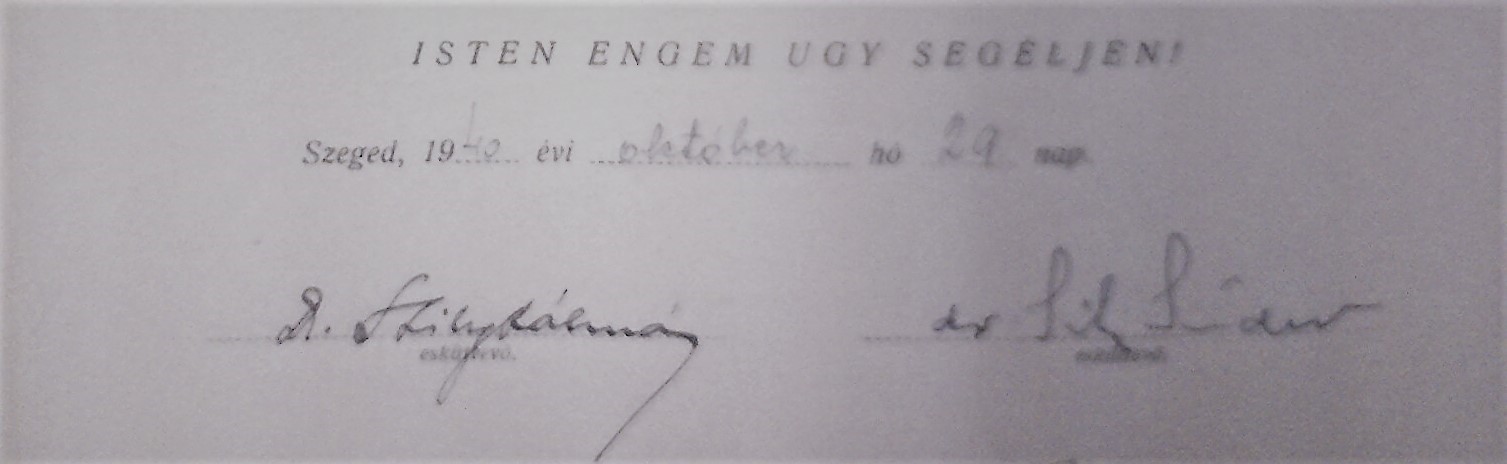
Tehát Sík Sándor tanár volt a Horthy Miklós Tudományegyetemen. Nem, ez nem Horthy halála után történt, hanem még életében, vicces is lehetett leugrani megnyitni a tanévet, "én, Horthy Miklós üdvözöllek benneteket a Horthy Miklós Tudományegyetemen" :D 
Sík Sándor hivatali esküjének hosszadalmas és bürokratikusan megfogalmazott szövege tulajdonképpen két csomópont köré épül: az egyik, hogy betartja Magyarország törvényeit, a másik pedig, hogy tiszteletben tartja az egyetem szabályait, hivatali kötelességeit lelkiismeretesen teljesíti. 
Na jó, és mi a fene olyan érdekes ebben az egészben?
Egyrészt az időpont, ami sokat elárul a körülményekről:


Szeged, 1940. október 29. A tanév nyilván nem akkor kezdődött, elkéstek volna az eskütevéssel a tanárok? Nem. Az ok ennél jóval érdekesebb: a Horthy Miklós Tudományegyetem 1940-ben jött létre, jogi értelemben Szeged városának ekkor lett saját egyeteme. Korábban ugyanis a trianoni békeszerződés után Magyarországra költöző kolozsvári Ferenc József Tudományegyetemnek adott otthont a város. 1940 augusztusában azonban a náci Németország segítségével a második bécsi döntés során visszacsatolták Magyarország területéhez Észak-Erdélyt, így a kolozsvári egyetem hazatérhetett, Szegeden pedig jogilag önálló, új egyetem nyitotta meg kapuit a diákok előtt. Első rektora Szent-Györgyi Albert volt. A régi tanári gárda nagy része Szegeden maradt, köztük Sík Sándor is, azonban mivel új intézményben kezdte meg munkáját, nyilván új esküt is kellett tennie. (Ha érdekelnek az új egyetem létrejöttének és megnyitójának részletei, ajánlom ezt a honlapot).
A másik, még ennél is izgalmasabb kérdés: hogy létezik, hogy Sík Sándor magyar állami egyetemen taníthatott? És most biztos felmerül a kérdés, hogy ez egyáltalán miért is kérdés?
Sík Sándor Budapesten született 1889-ben, de nem sokkal később Gödöllőre költözött a családjával együtt. Vallásos neveltetése igen korán kezdődött, a Piarista Gimnáziumba járt Pesten, és 14 évesen már a rend tagja volt. Budapesten végzett magyar-latin szakon az egyetemen, tanári oklevelet és doktori diplomát is szerzett. Vácott, Budapesten, Szegeden tanított; tanítványai emlékezete szerint karizmatikus tanár és remek előadó volt. Az oktatás mellett költőként, műfordítóként működött, a magyarországi cserkészmozgalom egyik alapítója volt. 1930-tól 1944-ig tanított Szegeden, ez idő alatt Radnóti Miklós mesterévé és barátjává vált, ő keresztelte meg a költőt 1943-ban a Szent István Bazilikában.


Amit kevesebben tudnak: maga Sík Sándor is zsidó volt, méghozzá mindkét szülői ágon. Apja, Sík Sándor és anyja, Winternitz Flóra még gyermekeik születése előtt megkeresztelkedtek. Ez persze mit sem számított a második zsidótörvénytől kezdve, ami a következőképpen határozta meg, ki számít zsidónak: akinek egy szülője vagy két nagyszülője az izraelita hitfelekezet tagja volt, vagy a törvény hatályba lépésekor, 1939-ben is oda tartozott. E törvény szerint, továbbá, a szellemi, közigazgatási, értelmiségi pályákon zsidók csupán 6%-ban képviseltethették magukat. Természetesen az egyetemek is ide értendőek. 
Sík Sándor vajon épp beleesett volna ebbe a 6%-ba? Nem. Ő mint a katolikus egyház felszentelt papja, mentesült a törvény alól. Rá tehát nem vonatkoztak a megszorítások, így a közelgő holokausztot is hitének köszönhetően vészelte át. Amikor az 1930-as évek végén meghozták a zsidótörvényeket, sok kikeresztelkedett és szekuláris zsidóéhoz hasonlóan Sík Sándor identitása is megkérdőjeleződött: zsidónak kéne éreznie magát csak azért, mert a törvény szerint ebbe a csoportba tartozik, annak ellenére, hogy soha nem volt az izraelita felekezet tagja? Ő így fogalmazta meg érzéseit: "Fajilag nincsen bennem egy csepp magyar vér sem: nem vagyok keverék: tiszta vér. És mégis: nincs bennem semmi, amit magyarnak ne éreznék mindenestül. [...] Magyar vagyok, az lennék, akkor is, ha a magyarságnak nem kellenék: ez nálam nem program, hanem tény: nem tudok másképp érezni!" 
E sorok a kor fajbiológiai/fajvédő politikai diskurzusának hatása alatt születtek, a ma embere számára már egyértelmű, hogy a faj maga az emberiség, és hogy egy egyénnek lehet kettős, sőt többes identitása - amint a magyar zsidók túlnyomó többsége is zsidó magyarnak/magyar zsidónak ("Mózes hitű magyarnak") érezte magát. Nem kell és valószínűleg nem is lehet választani az ember sokféle identitása közül.
Sík Sándor mentesítettként túlélte a vészkorszakot és az üldöztetést, a háború után tagja lett az MTA-nak, azonban a kommunizmus idején személyét háttérbe szorították a vallása miatt. 1963-ban halt meg.


***

Ezeket a trüffeleket Ani szülinapjára készítettem. Mivel a fahéj a kedvenc fűszere, ezért extra adagot kevertem bele :)

Hozzávalók:
0,1 dl sütő rum/likőr
9 szem aszalt meggy
0,2 dl tejszín
100 gr étcsoki
egy kiskanál vaj
fahéj
kakópor

Elkészítés:
A meggyszemeket megszórom fahéjjal és egy órára beáztatom a likőrbe. 
A tejszínt és a vajat összekeverem és felmelegítem, hozzáadom a csokit, pár csipet fahéjat, végül beleöntöm a likőrt és sima ganache-sá keverem. Beteszem a hűtőbe, hogy elérje a könnyen formázható állagot.
Kiskanállal gombócnyi adagokat veszek a krémből, a közepébe nyomok egy-egy szem meggyet, és trüffellé formázom. Fahéjjal kevert kakaóporba forgatom a trüffeleket.


If it wasn't obvious enough, I love my vocation and I think I would commit mental harakiri if I had to give it up and do something else. Being a historian requires many different skills, such as presenting, teaching skills, researching, writing and so on. And nowadays I'm more into popularising history, after all what's the point of hiding in one's ivory tower and living for one's own research if one doesn't share his research results with the public?! This is the essence of research: transmitting new knowledge.
Therefore here comes an experiment of how to interpret and introduce one source in a (hopefully) interesting way.


This is a certificate, which states that dr. Sándor Sík, teacher of the Miklós Horthy University, made an official teacher's oath. So Sándor Sík was a teacher at that university. No, this did not happen after the death of Miklós Horthy, regent of Hungary between the two world wars, but still during his lifetime. It must have been funny when he went there to open the academic year: "I, Miklós Horthy, greet you at the Miklós Horthy University" :D
The long and bureaucratic text of Sándor Sík's oath is built on two main topics: first, that he would keep the laws of Hungary, second, that he would respect the rules of the university and he would perform earnestly as a teacher.
OK, but why is this so interesting?
Firstly, because of the date, which tells us a lot about the circumstances:
Szeged, 29 October 1940. Obviously the academic year did not start at that time, so were the teachers late with taking the oath? No. The reason is even more interesting: the Miklós Horthy University was established in 1940; in legal terms the city of Szeged has an own university from this time. Previously, after Hungary had lost WW1 and the Treaty of Trianon had been signed causing the loss of 2/3 of the country's territory, the Franz Joseph University was moved to Szeged from Kolozsvár (Cluj-Napoca). However, in August 1940, with the help of Nazi Germany, Northern Transylvania was reassigned to Hungary in the Second Vienna Award. Therefore the university of Cluj could return to its hometown, while a new, independent university opened its gates for the students in Szeged. Its first rector was Nobel prize laureate Albert Szent-Györgyi. Most of the teachers, among them Sándor Sík, remained in Szeged, but since they started to work in a new institution, they had to make a new oath.

The university in Szeged

Another, even more exciting question: how come that Sándor Sík was allowed to teach at a Hungarian state university? And now the question emerges, why is this a question at all?
Sándor Sík was born in Budapest in 1889 but not much later his family moved to Gödöllő. His religious education started quite early; he frequented the Piarist Secondary School in Pest and at age 14 he was already a member of the order. He studied Hungarian and Latin at the university of Budapest; he obtained a teacher's degree and a doctorate. He was teaching in Vác, Budapest and Szeged; according to the recollections of his pupils, he was a charismatic educator and an outstanding presenter. Besides teaching, he also worked as a poet and translator and he was one of the founders of the boy scout movement in Hungary. He was teaching in Szeged between 1930 and 1944; he became a mentor and friend of Miklós Radnóti (one of my favourite poets); he baptised the poet in 1943 in the Saint Stephen Basilica.


What is not so well-known: Sándor Sík himself was Jewish - both of his parents were Jews. His father, Sándor Sík and his mother, Flóra Winternitz, had converted even before their children were born. This did not count though according to the Second Anti-Jewish Law, which defined Jews as follows: people with one parent or two grandparents who had been members of the Israelite denomination, or they were still members of it in 1939, when said law was introduced. Moreover, this law restricted the number of Jews to 6% in intellectual and administrative fields. Naturally this included universities too.
So did Sándor Sík fall into this 6%? No. He, as a priest of the Catholic church, was exempted from the restrictions. He also survived the approaching Holocaust due to his faith. When the anti-Jewish laws were passed at the end of the 1930s, just like that of many converted and secular Jews, the identity of Sándor Sík was also questioned: shall he consider himself Jewish just because according to a law he is defined as one - even though he had never been a member of the Israelite denomination? He wrote about his feelings like this: "Racially there is not a single drop of Hungarian blood in me: clear blood. And still: there is nothing in me that I wouldn't feel fully Hungarian. [...] I am Hungarian; I would be even if Hungarians didn't want me: it's not my program, it's a fact: I cannot feel otherwise!"
These lines were conceived under the influence of the era's racial biological/racial political discourse; today it is evident that humanity per se is one race and that one person may have double or multiple identities - just like most of the Hungarian Jews considered themselves Hungarian Jews/Jewish Hungarians ("Hungarians of the Mosaic faith"). One does not have to and should not choose between one's identities.
Sándor Sík survived the Shoah and the persecutions as exempted; after the war he became a member of the Hungarian Academy of Sciences but during the communist times he was marginalised because of his religion. He died in 1963.

***

I made the above truffles for Ani's birthday. Since cinnamon is her favourite spice, I put an extra portion of it in the truffles :)

Ingredients:
0,1 dl rum/liqueur
9 dried sour cherries
0,2 dl cream
100 gr dark chocolate
one spoonful of butter
cinnamon
cocoa powder

Recipe:
I sprinkle the cherries with cinnamon and I soak them in the liqueur for an hour.
I mix the butter and the cream, I warm it up, I add the chocolate and some pinches of cinnamon. Finally I pour the liqueur in it and I stir it until it becomes a smooth ganache. I put it in the fridge until the texture becomes easily mouldable. 
I take small portions from the cream, I put one cherry in the middle and I shape it into a truffle. I roll the truffles in cocoa powder mixed with cinnamon.

May 17, 2018

jázminlikőr // jasmine liqueur

A likőrkészítés talán még varázslatosabb, mint a csokizás - abból a szempontból, hogy míg a csokinál az ember tevékenyen, aktívan vesz részt a varázs létrejöttében, a likőrnél mindez idő, türelem és valamiféle titokzatos átalakulás kérdése. 
Korábban készítettem már rebarbaralikőrt és orgonalikőrt, ezúttal pedig jázminnal kísérleteztem. A legkedvesebb virágom, törékeny, tiszta, édes illata tavaszi éjszakákat, a csalogány énekét, virágba borult tájat idéz. Ezt akartam itallá szűrni.

Hozzávalók:
egy kosárnyi (kb. 30 gr) jázminvirág
20 dkg cukor
1 dl víz
2 dl vodka

Elkészítés:
A jázmin illatanyaga - a rózsával ellentétben - nem alkoholban, hanem vízben oldódik, ezért először a cukorszirupot készítem el. 20 dkg cukor és 1 dl víz keverékét addig melegítem, amíg a cukor fel nem oldódik. A jázmint megtisztítom: lemosom, eltávolítom belőle a rovarokat, lecsippentem a zöld szárakat. Ezután a virágokat belekeverem a még meleg szirupba, lefedem, és állni hagyom két éjszakán át. 
Leszűröm a szirupot, a virágokat, miután jól kinyomkodtam, kidobom. A léhez hozzáöntöm a vodkát, és összerázom. Két hétig állni hagyom, hogy az ízek összeérjenek.


A Hold járása hajt. A csillagok - kurvák, akik elérhetetlenségükben csábítanak magukhoz, soha meg nem szűnő vonzásuk ősi siratók ruhaszaggató fájdalma és tengerszemek sötét, elképzelhetetlen mélysége.
Az út mindig van. Az út végtelen, az út szűz lány testeként feszül az őt járók alá. Mindig a Hold után. Néha aranybölcső, néha rézérme, néha más világokba vezető fekete kút az égkupola héjában.
Ahogy fogy a távolság, a messzeségben alvó dombok egyre éberebbek lesznek, és azzal együtt röppen el varázsuk is, hogy szeszélyes, kék madárként még távolabbra csalogassa a csapdájába esőket.
Szabadság.                                                                     
Szabadság. Felhők, tavaszi eső, vadvirágok és gazok az árpaföld szélén, lehajló, zuzmós ágak, süvítő szél a tengerparton, őszi napfény fehérre meszelt parasztház eresze alatt, téli alkonyon ködbe fulladó nap, fecskék cikázó röpte a tó felett, hatalmas nyári éjszaka kínja...
Sokakat láttam, akik érezték. Egyesek áradó szeretetük által próbálták másoknak átadni, ha már nekik nem sikerült megszerezni. Mások igyekeztek minél többet magukhoz ölelni a világból, hátha így lelkükhöz láncolhatják. Megint mások kis, titkos üzelmeket folytattak, hogy ismerőseik és saját maguk háta mögött mégis átélhessék.
De többen vannak, akik nem érzik. Nem érzik, vagy nem akarnak tudomást venni róla. Mint szemlén a katonák, úgy sorakoznak napjaik unt házastársakkal, képzelt szerelmekkel; gyötrelmes munkával dolgozzák át magukat egyik esztendőből a másikba.

Az én napjaim - mint erdőben a fák kusza gyönyörűségükben, fényfoltosan, szitáló cseppek fátylában; édes sötétségükön moha sarjad, gyanta csurran; a sziklák mögött farkas kapar, fajdkakas zörgeti lehullott levelek múmiáit. Minél többet járom útjait, annál biztosabban tudom - sosem fogom elhagyni.


Sometimes it seems I'll forever be trapped in the gilded cage of my fairytale world. Forever, alone with my tales. It is miraculous and horrifying at the same time. I will always imagine that the torn clouds of the night, bathing in orange light, belong to another realm; when seeing the empty balcony of a mansion looking over the Danube and the majestic night skyline of Pest from the Buda hill, I imagine a slender figure standing on it, in a long, translucent dress illuminated by the tender light of a lantern - she might be thinking of her first ball or that enchanting stranger that she'd seen during her afternoon walk; a night butterfly flying in front of me is a magical creature carrying dreams. My world is filled with light and colour, it is a wonderful world. Wonderful and solitary.


Liqueur making is maybe even more magical than chocolate making - from the point of view that while one is actively involved in the magical process of chocolate making, in the case of liqueurs it is a matter of time, patience and some mysterious transformation.
Previously I made rhubarb and lilac liqueurs; this time I experimented with jasmine. It is my favourite flower, its delicate, clear, sweet fragrance evokes spring nights, the song of the nightingale and flowering landscapes. This is what I wanted to filter into potion.

Ingredients:
a basketful of jasmine flower (ca. 30 gr) 
20 dkg sugar
1 dl water
2 dl vodka

Recipe:
The flavour molecules of jasmine - unlike those of rose - are water soluble, therefore first I make sugar syrup. I warm the mixture of sugar and water until the sugar dissolves. I clean the jasmine flowers: I wash them, I get rid of little insects and I chip off the green stems. Then I put the flowers in the still warm syrup, I cover the pot and leave it like that for two nights.
I distil the syrup and after squeezing the last drop from the flowers, I throw them away. I add the vodka to the liquid and I shake it. I store it for two weeks so the flavours can get mature.


The motion of the Moon chases me. The stars - whores, who allure me with their unreachability; their unceasing attraction is the garment-tearing pain of ancient mourning songs and the dark, inconceivable depth of tarns.
The road always exists. The road is endless; it stretches under wanderers like the body of a virgin. Always after the Moon. Sometimes it is a golden cradle, other times a copper coin, and sometimes a black well leading to other worlds in the cupola of the sky.
As distance decreases, the hills sleeping afar awaken and their magic flees in order to lure those fallen in its trap even further, like a sassy, blue bird.
Freedom.
Freedom. Clouds, spring rain, wild flowers and weeds at the border of the barley field, bending branches covered with lichen, whooshing wind on the seaside, autumn sunlight under the drain of a whitewashed cottage, sun drowning in mist at winter dusk, the swirling flight of swallows above the lake, the anguish of an enormous summer night...
I have seen many who felt it. Some tried to deliver it to others through radiating love as they themselves didn't manage to get hold of it. Others tried to embrace as much of the world as they could in order to chain it to their souls. Others carried on small, secret practices to experience it behind their own backs and those of their acquaintances.
But there are even more who don't feel it at all. They don't feel it or don't even want to be aware of it. Like soldiers at a muster, their days are aligned with boring spouses, fictional passions; they work themselves excruciatingly from one year to the next.
My days - like trees in the forest in their entangled beauty, with specks of light, in the veil of drizzling drops; moss germinates and resin trickles in their sweet darkness; wolf scrapes behind the rocks; grouse rattles the mummies of fallen leaves. The more I travel its paths, the more assured I am - I will never leave it.

September 20, 2016

részeges bonbon-cupcake // drunk bonbon-cupcake

Jeeee, megérkezett az ösztöndíj! Ennek örömére azonnal be is figyelt egy új polikarbonát forma :D


És mivel tegnap meglátogatott minket az esküvői tanúnk egyenest Szlovéniából, úgy döntöttem, hogy rögvest fel is avatom a formát  :D 
Úgy tűnik, időközben egyik napról a másikra, visszavonhatatlanul megérkezett az ősz - bár szerencsére még mindig napos az idő, de a levelek és gesztenyék már hullanak, és estefelé hűvösödik az idő. Merem remélni, hogy egy darabig még marad ilyen meleg, nekem az ősz ugyanis egy hosszú, szükségszerű átmenet a nyárból kedvenc évszakomba, a télbe. Ahogy a természet elszunnyadásának első jelei megjelennek, már érzem, ahogy a háttérben ott várakozik félhomályos köpenyben a tél, és alig várom, hogy végre megérkezzen. Biztosan furcsa, de már ilyenkor a karácsonyon jár az eszem - persze nem az ünnep külsőségein, hanem a hangulaton, amit annyira szeretek: korai sötétedés, gyertyák illata, a lehelet fehér párája a levegőben, frissen ropogó hó, az a fény az emberek szemében, amikor már tudják, hogy hamarosan megpihenhetnek otthon a szeretteik körében és jókat ehetnek. Nekem ez az év fénypontja.
De addig még várni kell néhány hónapot, és ha már ősz, akkor miért is ne hangolódjunk rá egy kis csokival? Nekem az ősz = gyümölcsök, és valamiért mindig a gyümölcs és alkohol kombinációja jut eszembe róla (egész biztosan a szüret, az ilyenkor készülő gyümölcsalapú alkoholos italok miatt). Ebben a szellemben készült ez a bonbon is, vagyis inkább miniatűr cupcake (a formája miatt): gyümölcsdarabok, likőr és selymes, mascarponés krém elegyedik benne. Aki nem akar a temperálással bajlódni, annak ajánlom a tölteléket önmagában is :)


Hozzávalók:
4+2 cl likőr
4-5 szem aszalt meggy
130 gr fehércsoki
4 evőkanál mascarpone
fahéj

Elkészítés:
Feldarabolom az aszalt meggyeket, és egy pohárban felöntöm őket 4 cl likőrrel, majd állni hagyom 1-2 órát, amíg a gyümölcs magába szívja az alkoholt.
A temperált csokit beleöntöm a bonbonformába, aztán kicsorgatom. Spaklival lehúzom róla a felesleget, és félreteszem, míg megszilárdul. Közben mixerrel apróra vágom a meggyet. A mascarponét kikeverem 4 kiskanál még olvadt fehércsokival (lehet több, vagy kevesebb is, ízlés szerint), 2 cl likőrrel, és egy csipet fahéjjal. 
Amikor a formába öntött csoki megszilárdult, kiszedem a formából, és minden kis kapszli aljára teszek egy kis adag felaprított meggyet. Egy kés hegyével óvatosan lenyomom, a tetejébe pedig habzsákból nyomok egy adagot a mascarponés krémből. Végül ízlés szerint díszítem - én apró cukorgolyókkal és késhegynyi piros lüszterporral szórtam meg a színhatás kedvéért.
Jó étvágyat!


Yaaaaaaaay, my scholarship has arrived! Obviously I immediately had to buy a new polycarbonate mould :D


And since our wedding witness visited us directly from Slovenia, I decided that I'm gonna inaugurate the new mould :D
It seems that in the meanwhile, suddenly and finally autumn has arrived - even though fortunately the weather is still sunny, but leaves and chestnuts are falling and it gets chilly in the evening. I hope that it'll still stay warm for a while, as autumn for me is a long, inevitable transition from summer to my favourite season, winter. As the first signs of nature's slumber appear, I can feel as winter is waiting in the background in its twilight-cloak, and I'm looking forward to its arrival. It might be weird but I'm already thinking about Christmas - of course not about its external features but about its atmosphere that I love so much: early gloom, the scent of candles, white puff of breath in the air, freshly crackling snow, that light in people's eyes when they already know that soon they can take a rest at home surrounded by their loved ones and they can have some good meals. This is the highlight of the year for me.
But we still have to wait some months until then, and if autumn, why not enjoy it with some chocolate? For me autumn = fruits, and for some reason I always associate it with the combination of fruits and alcohol (most probably because of harvesting and all the fruit-based alcoholic drinks prepared at this time). This bonbon - or rather miniature cupcake (because of its form) was created keeping this in mind: a mixture of bits of fruits, liqueur, and silky mascarpone cream. I recommend the filling in itself to those who don't want to deal with tempering :)


Ingredients:
4+2 cl liqueur
4-5 pieces of dry sour cherry
130 gr white chocolate
4 table spoon of mascarpone
cinnamon

Recipe:
I cut the sour cherry into pieces and I mix it with 4 cl liqueur in a glass. I leave them for 1-2 hours so the fruit can absorb the alcohol.
I pour the tempered chocolate in the mould, then I turn it upside down. I scrape off the excess and leave the chocolate to solidify. In the meanwhile I blend the sour cherries. I mix the mascarpone with 4 spoonfuls of still molten chocolate (it can be less or more, according to your taste), 2 cl liqueur and a pinch of cinnamon.
When the chocolate shells are ready, I take them out of the mould and I put a bit of cherry in the bottom of each tiny cap. I carefully push the fruits down with the tip of a knife, and on the top I add some of the mascarpone cream. Finally I adorn the cupcakes: I put tiny candyballs and a bit of red luster dust for the sake of the color.
Good appetite!